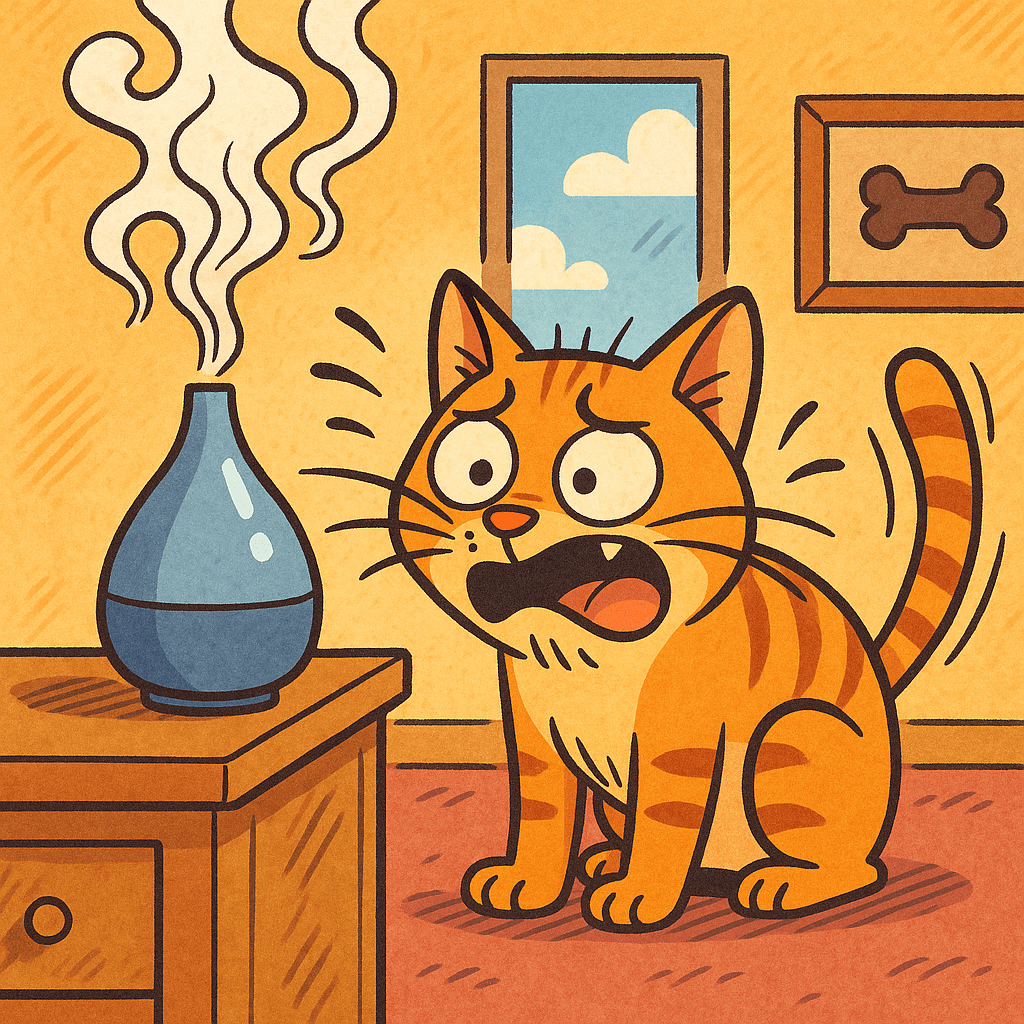
Sniffing Out the Truth About Pets and Oils
Essential oils can make our homes smell amazing, soothe stress, and even help with cleaning. But if you’re a pet parent, you’ve probably wondered: “Are essential oils safe for my cat or dog?” The short answer: sometimes. The long answer: it’s complicated — because pets process oils differently than we do, and your cat doesn’t care that your diffuser smells like a spa.
1. Why Essential Oils Can Be Risky for Pets
Cats and dogs aren’t just tiny humans with fur. Cats, in particular, lack certain liver enzymes needed to process compounds in many oils. Translation? What smells like “relaxation” to you might smell like “danger” to them.
“Essential oils are highly concentrated compounds harvested from plants that are highly volatile and easily absorbed into the cells of the body… While they can have excellent health benefits, essential oils can also pose dangers to our furry friends.”
— Dr. Edele Grey, MVB (Veterinary Surgeon)
2. Essential Oils That Are Toxic to Pets
⚠️ Oils to banish from your home if you’ve got four-legged roommates:
- Tea Tree (Melaleuca)
- Eucalyptus
- Citrus oils (lemon, orange, lime, grapefruit)
- Peppermint
- Pine oils
- Wintergreen
- Cinnamon
- Clove
Basically, if it smells like a candle shop in December, keep it away from your pets.
“Essential oils should never be given by mouth or in the animal’s food… Oral ingestion can cause vomiting, diarrhea, and central nervous system depression… Seizures are also possible from large doses.”
— Dr. Murl Bailey, Texas A&M Veterinary Medicine
3. Essential Oils That Are Generally Safer (When Used Properly)
Some oils get the “okay, but only in moderation” stamp when diluted and diffused carefully:
- Lavender (the catnap of oils)
- Frankincense (a chill, grounding scent)
- Chamomile (think bedtime tea, but for vibes)
- Cedarwood (woodsy and mellow)
Even then: don’t drip them directly on your pet. Your cat doesn’t want to smell like a walking lavender sachet.
“While some essential oils can be safe for pets when used properly, others can be toxic and even life-threatening.”
— Dr. Bethany Hsia, DVM
4. Safe Ways to Use Essential Oils Around Pets
- Diffusion: Use in an open room, and make sure your pet can leave. If your cat gives you the stink eye and bolts, that’s their review system at work.
- Dilution: Oils are strong. Think “a drop in a bucket” levels.
- Storage: Cats love to knock bottles off shelves. Don’t give them the satisfaction.
- Observation: If your pet starts drooling, hiding, or giving you the “why are you doing this to me” stare — shut it down.
“A lot of people are using essential oil diffusers now, and my concern is that the general level of awareness of the risks for household pets is pretty low.”
— Dr. Lori Teller, DVM
5. Special Risks for Birds and Small Pets
Birds have super-sensitive respiratory systems, and small pets like rabbits or hamsters groom constantly, which means they’ll end up eating anything on their fur. Translation: diffusers + birds = bad combo.
“Birds are particularly susceptible because of their respiratory systems and cats and other animals who self-groom are at risk of ingesting the oils. Diffusers should not be used if there are birds in the home or animals who have asthma, allergies or similar conditions.”
— Dr. Hannah Weitzenfeld, BC SPCA
6. Alternatives for Pet-Friendly Freshness
If you want your home to smell good without stressing your pets:
- Baking soda + vinegar cleaners (cheap and effective).
- Pet-safe air purifiers (bonus: less fur tumbleweed).
- Fresh herbs like rosemary or thyme (your cat might judge, but they’ll survive).
🐕 Final Thoughts
Essential oils aren’t evil — they just need to be used with caution when pets are around. Think moderation, ventilation, and always having an escape route for your cat. When in doubt, check with your vet.
Because at the end of the day, your cat doesn’t care if your living room smells like “Peaceful Forest Breeze.” They just want to nap in their box without feeling dizzy.
 Paws Button Blog
Leave a comment